Almost nobody verifies their casino account on the day they sign up. You deposit, you play, you win something, you hit withdraw — and then a message appears asking for a photo ID, a utility bill and a picture of your card. The money sits in limbo while you hunt for a bank statement that is less than three months old. That pause is the single most common reason a payout feels slow, and it is entirely avoidable.
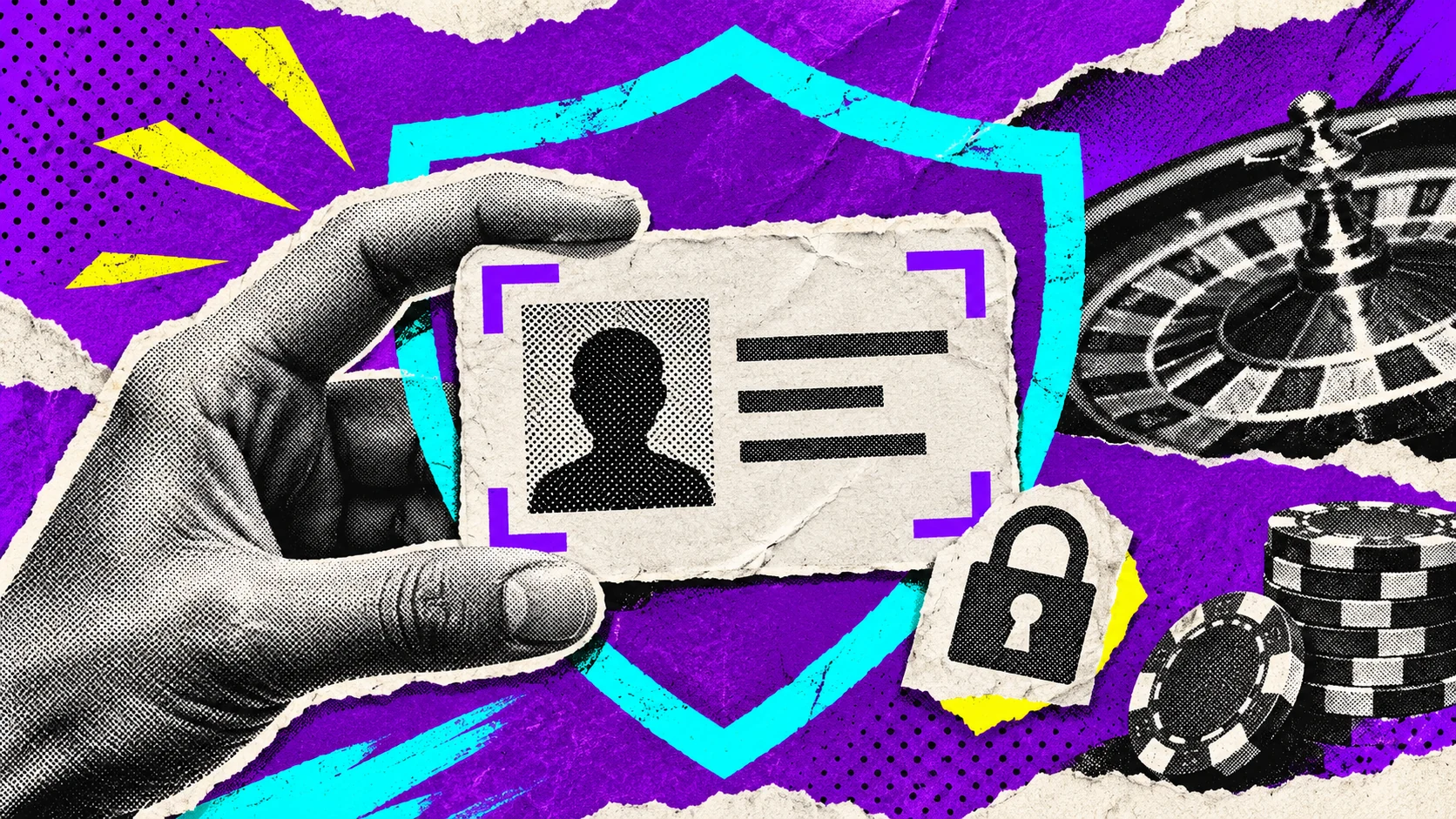
KYC — Know Your Customer — is a licensing obligation, not a stalling tactic. A licensed operator has to confirm that you are a real adult person, that you live where you say you live, and that the money moving in and out belongs to you. The check itself is dull and mechanical. What makes it painful is timing: it almost always triggers at withdrawal, which is the exact moment you have the least patience for paperwork. Submit the same documents on day one and the process costs you nothing except ten minutes you were not using anyway.
Why the check lands right when you withdraw
Deposits are low-risk for an operator — money coming in is money they can refund to its source. Withdrawals are where identity actually matters, because that is where funds leave the system. So verification is usually enforced at the first cash-out request, or when a running total crosses an internal threshold.
The practical effect is a two-stage wait. First the documents are reviewed, then the payment itself is processed. A review window of one to three business days plus a payment window of one to three more is a realistic illustrative shape (example figures, not a quoted policy) — and they run back to back, not in parallel. Verify early and you delete the first stage entirely. If you want the full sequence of what happens after you press the button, our deposits and withdrawals walkthrough maps the whole path.
The three documents you will be asked for
Nearly every standard check reduces to three proofs. Operators word the requests differently, but they are looking for the same three things.
| Proof | Usually accepted | Usually rejected |
|---|---|---|
| Identity | Passport, national ID card, or driving licence — in date, both sides where the card has two | Expired documents, photocopies of photocopies, student or gym cards |
| Address | Utility bill, bank or credit card statement, council or municipal tax letter, usually dated within the last three months | Mobile phone bills at some operators, anything with no visible address, screenshots cropped past the date |
| Payment method | Card photo with the middle digits hidden and CVV covered, or an e-wallet or bank screenshot showing your name and account reference | A card in someone else's name, a fully blacked-out card, a receipt instead of an account page |
Identity
Photograph the document flat, in daylight, with all four corners inside the frame. The machine-readable strip at the bottom of a passport page must be legible — that is often what an automated reader actually parses. Some operators add a selfie or a short liveness video holding the document; that is a standard step, not a sign something is wrong.
Address
The document needs your full name, your full address, the issuer's name and a visible date, all in one image. A bill that shows your name on page one and your address on page three fails. Statements downloaded as PDFs from online banking are normally fine; a web page with no issuer branding usually is not.
Payment method
This proof is really about ownership, and it is why the method you choose matters. Cards and bank transfers carry your name natively. Some e-wallets and prepaid options are harder to tie to you, which can mean extra questions later. Our guide to choosing a payment method covers which options verify cleanly and which invite follow-ups.
What makes a submission bounce
Rejections are rarely about suspicion. They are about legibility and mismatches.
- Name mismatch. Your account says Mike, your passport says Michael. Register under your legal name exactly as it appears on your ID.
- Address mismatch. You moved and never updated your profile. Fix the profile first, then upload.
- Stale date. A bill from last year is not proof of where you live now.
- Cropped or glare-washed images. If a human squints at it, an automated reader fails it.
- Over-redaction. Hide the middle card digits and the CVV. Hide the name or the last four and the proof is worthless.
- Third-party payment. Depositing with a partner's card is a hard stop at most licensed operators, and it can freeze a balance rather than just delay it.
Upload as PNG or JPG unless a PDF is offered, keep each file under the stated size cap, and use the upload form rather than email where both exist — the form attaches the file to your case automatically.
Source of funds is a different request
A standard KYC check asks who you are. A source-of-funds or enhanced due diligence request asks where the money came from. The two get confused constantly, and the second one is more involved.
It is usually triggered by scale or pattern rather than by anything you did wrong: cumulative deposits crossing a threshold, a sudden jump from small to large stakes, or a mismatch between declared circumstances and actual turnover. Round illustrative example: an account that deposits roughly 50 a month for a year, then 5,000 in a week, is likely to prompt a question.
What gets asked for here is financial, not identity-based — recent payslips, an employment letter, tax returns, business accounts, a sale or inheritance document, or bank statements showing the funds arriving. Expect a longer review, often with a named compliance team rather than general support. Two things help: answer the specific question asked instead of sending everything you own, and keep your own record of deposits so you can explain a spike without reconstructing it from memory.
The day-one checklist
- Register with your legal name, real date of birth and current address — no nicknames, no old flat.
- Photograph your ID and a recent address document before you deposit anything.
- Deposit with a method in your own name, and keep the first one as your withdrawal route where the operator allows it.
- Upload everything through the account's verification page and note the date you submitted.
- Check for a confirmation that verification is complete — not just that files were received.
- If something is rejected, ask exactly which field failed rather than re-sending the same image.
One thing worth saying plainly: an operator that keeps moving the goalposts, asks for the same document four times, or cannot tell you what is outstanding is showing you something about how it handles payouts generally. That behaviour belongs on the list of warning signs in how to choose a safe online casino. Crypto-funded and minimal-verification sites reduce the paperwork at the front end but shift the risk elsewhere — see no KYC casinos for what that trade actually involves, including the fact that checks can still appear later if a withdrawal looks unusual.
The short version
KYC is a fixed cost of playing at a licensed site. You pay it either calmly on day one, or impatiently while a withdrawal waits. The documents are the same in both cases; only your mood differs. Ten minutes with a passport and a utility bill in good light removes the most common delay between winning and being paid.
Gambling is for adults 18 or over and should stay a form of entertainment you can afford — if it stops feeling that way, the limits and self-exclusion tools on our responsible gambling page are there to use.